T+1 settlement is why the money from a stock sale shows up in your account the moment you sell, yet can’t always be spent or withdrawn. Under T+1 settlement, a U.S. stock trade becomes final one business day after you make it. Sell on Monday and the cash is fully yours on Tuesday. Here’s what that one day changes, and how to keep it from tripping up your next trade.
The short version
- T+1 means a trade settles one business day after the trade date. Sell Monday, settled Tuesday.
- U.S. stock trades moved from two days to one on May 28, 2024.
- You can withdraw money from a sale only after it settles.
- In a cash account, don’t sell a stock until the money you paid for it has settled.
- Hold a stock for weeks and settlement barely touches you.
What T+1 settlement means
Every trade carries two dates. The trade date is the day your order fills. The settlement date is the day the deal is finished, when the buyer’s money and the seller’s shares actually change hands.
The T stands for the trade date, and the number is how many business days settlement takes. The SEC adopted the one-day rule on February 15, 2023, and it took effect on May 28, 2024. Before that, stock trades took two business days, so any article still talking about T+2 is out of date.
The SEC’s reason was risk: the shorter the gap between the trade and the payment, the less can go wrong in between. Your benefit is simpler. The money from a sale is ready a full day sooner than it used to be.
Trade date vs. settlement date: a quick calendar
| Day you sell | Cash settles |
|---|---|
| Monday | Tuesday |
| Tuesday | Wednesday |
| Wednesday | Thursday |
| Thursday | Friday |
| Friday | The next Monday |
Weekends don’t count, because settlement runs on business days. A holiday can push it back one more day. Your broker shows the exact settlement date next to every trade, usually in the order history.
When can I use the money from selling a stock?
Right after a sale, your account balance jumps. That money is real, but until the next business day it is still unsettled. What you can do with it depends on the kind of account you have.
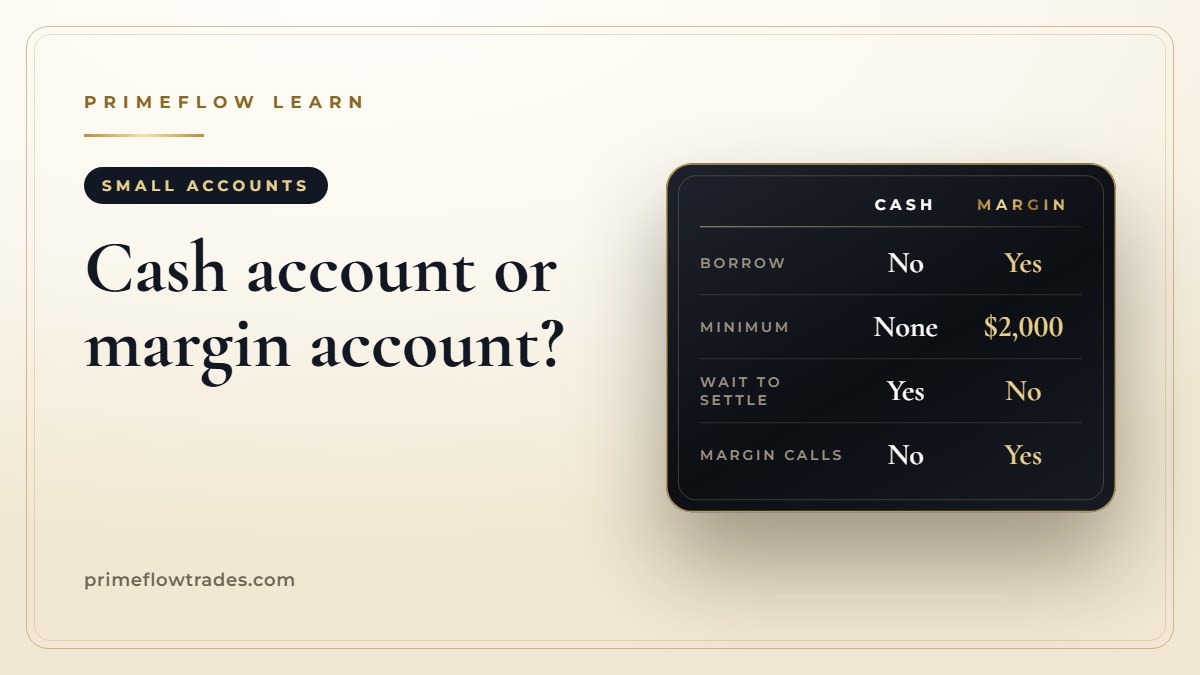
- Buy another stock in a margin account: yes, straight away. Margin accounts don’t wait on settlement.
- Buy another stock in a cash account: usually yes, but the new stock has to stay put until the sale money settles. More on that below.
- Withdraw it to your bank: only after it settles. Many brokers show a separate line for cash you can withdraw, and the bank transfer adds its own time after that.
If you’re not sure which account you have, or which one suits you, our guide to the cash account vs. margin account lays out both side by side.
How T+1 settlement affects a cash account
A cash account runs on settled money. You can trade as often as you like, but two mistakes cause nearly all the trouble, and both come down to selling too soon.
The good faith violation. Say you sell Stock A on Monday and use that money to buy Stock B the same morning. So far, fine. But if you also sell Stock B on Monday, before Monday’s sale money settles on Tuesday, you’ve sold a stock that was never fully paid for. That’s a good faith violation. Each broker sets its own penalty, and a common one after several in a year is 90 days of trading with settled cash only.
Freeriding. This is the stricter version: buying a stock and selling it without ever paying for it. Under the Federal Reserve’s Regulation T, it can get the account frozen for 90 days. During a freeze you can still buy, but every purchase has to be paid for in full on the day you make it.
The fix is one habit. Before you sell anything in a cash account, check that the money you bought it with has settled. Under T+1, that usually means waiting until the next business day. Our free $2,000 Day Trader Trap report covers the other checks worth running before a small account places a trade, and day trading under $25,000 explains what changed for small accounts in 2026.
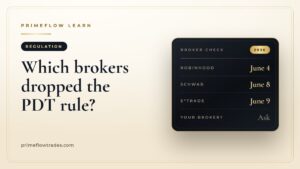
The pattern day trader rule never applied to cash accounts. Since June 4, 2026, margin accounts no longer need $25,000 either; your broker’s intraday margin rules set the limit there.
Why settlement rarely matters when you hold for weeks
Settlement only bites when money moves fast. If you buy a stock and hold it for weeks, a one-day clock is over long before you’re ready to sell.
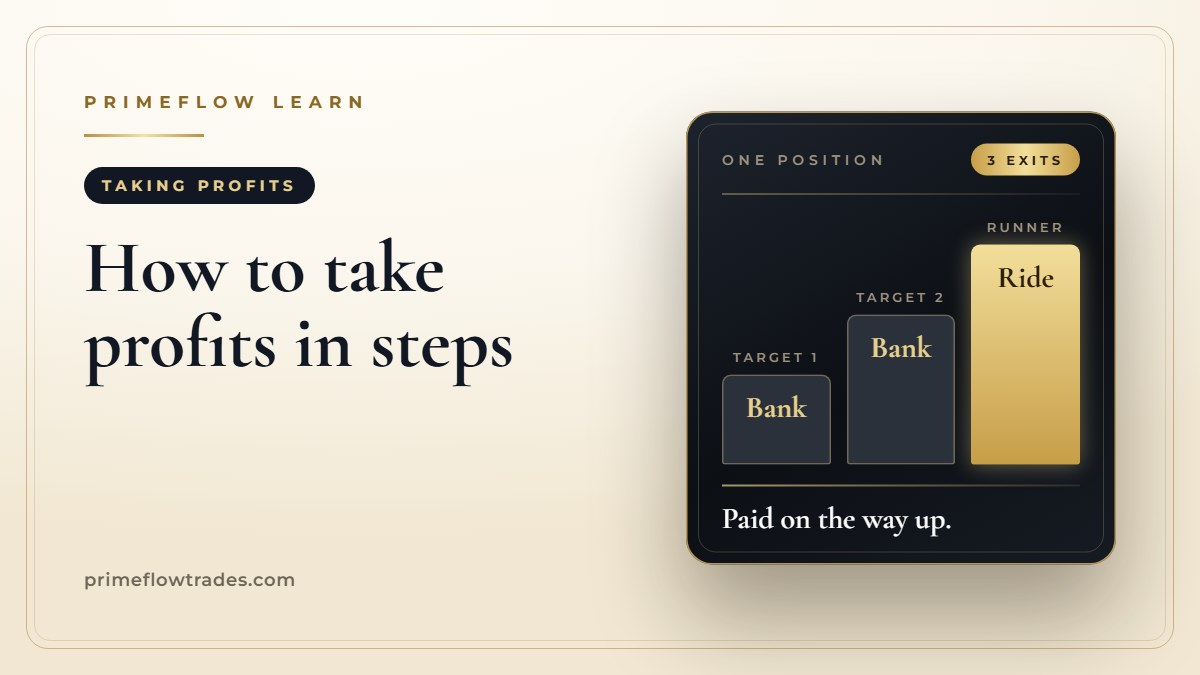
That’s how our alerts are built. Each one gives a buy price, two profit targets and a runner we let ride. When the first target fills, that money settles the next business day, while the rest of the position keeps working. Our guide on how to take profits on stocks shows how the three exits fit together.
Take VSH. It was bought at $33.95 on May 8, 2026 and reached $63.27 on June 3, 2026, a move of 86% in 26 days. On a hold like that, waiting one day for cash to settle doesn’t register. You can see every closed alert, with its dates and prices, on our public trade log, where 407 of our first 427 closed alerts were winners.
Common questions
What does T+1 settlement mean?
It means a trade settles one business day after the trade date. If you sell a stock on Monday, the deal is finished and the cash is fully yours on Tuesday.
How long does it take for a stock sale to settle?
One business day for most U.S. stock and ETF trades. A sale on Friday settles the following Monday, and a holiday can add a day. Your broker shows the exact settlement date for each trade.
When did T+1 settlement start?
May 28, 2024. The SEC adopted the rule on February 15, 2023, and it replaced the old two-day cycle, known as T+2.
When can I withdraw money after selling a stock?
Once the sale settles, which is one business day after the trade under T+1. After that, the transfer to your bank takes its own time, depending on your broker and bank.
Can I buy stock with unsettled funds?
Usually, yes. In a margin account there is no wait at all. In a cash account you can buy with unsettled money, but you must hold the new stock until that money settles, or you risk a good faith violation.
What happens if I sell a stock before the funds settle?
In a cash account, selling a stock bought with unsettled money before that money settles is a good faith violation. Brokers set their own penalties, and repeated violations commonly lead to 90 days of trading with settled cash only.
Sources
- SEC: Rules to Shorten the Securities Transaction Settlement Cycle (2023-29)
- FINRA: Understanding Settlement Cycles
- FINRA: Frequent Intraday Trading, Understanding the Basics
- Investor.gov (SEC): Freeriding
Settlement and cash account rules are summarized for general education. Check the settlement dates and account rules your broker applies.

PrimeFlow Trades publishes educational research and market commentary. Nothing on this page is investment advice or a recommendation to buy or sell any security. Trading involves risk, including the loss of money you invest. Past results, including any trade shown here, do not guarantee future results.