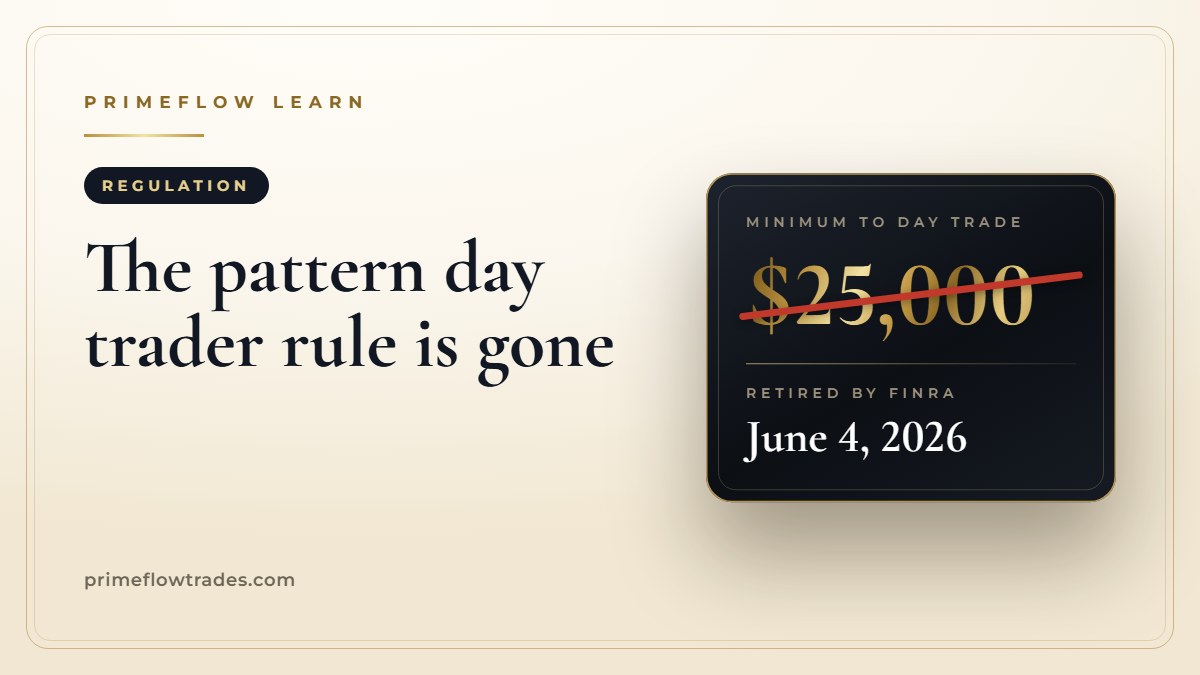
For years, the cash account was the small trader’s way around the $25,000 day trading rule. That rule ended on June 4, 2026, so the old reason to pick a cash account is gone. That doesn’t make margin the automatic answer. Here’s what each account lets you do, what each one costs, and how to choose.
The short version
- A cash account trades only with money that has settled. No borrowing, no margin calls.
- A margin account lets you trade before money settles and borrow if you choose to, but it needs at least $2,000 and can call for more.
- The $25,000 day trading minimum no longer applies to margin accounts under FINRA rules.
- Pick the account that fits how you trade, not the one the old rule pushed you into.
How a cash account works
In a cash account, you pay the full price of everything you buy, with money that has already settled. You never borrow from your broker, so there are no margin calls and no interest.
The catch is settlement. Most stock trades settle one business day after the trade. Sell a stock on Monday and that cash is settled on Tuesday. Until then, the money shows in your account but it isn’t fully yours to trade with.
That’s where most cash account trouble starts. If you buy a stock with money from a sale that hasn’t settled yet, then sell that new stock before the money settles, it’s called a good faith violation. Brokers set their own penalties, and a common one after several violations in a year is 90 days of trading with settled cash only.
There’s a stricter version called freeriding: buying a stock and selling it without ever paying for it. Federal rules can put the account on a 90-day freeze, during which every purchase has to be paid in full on the day you make it.
How a margin account works
A margin account lets your broker lend you money using your stocks as security. Under the Federal Reserve’s Regulation T, a broker can lend up to 50% of the purchase price of an eligible stock.
FINRA requires at least $2,000 in the account, or the full purchase price if that’s less, before you can buy on margin. After that, your equity has to stay at or above 25% of the value of your stocks, and many brokers set a higher bar of their own.
If your account drops below that line, you get a margin call. FINRA is blunt about what can happen next: the firm can sell your securities without notice, and it doesn’t have to contact you first. You also pay interest on whatever you borrow.
The benefit is flexibility. In a margin account you don’t wait for cash to settle before trading again, and the good faith rules that trip up cash accounts don’t apply.
What the rule change did, and didn’t do
Until June 4, 2026, a margin account under $25,000 was held to three day trades every five business days. That’s why so many small traders used cash accounts in the first place: settled cash was the only limit.
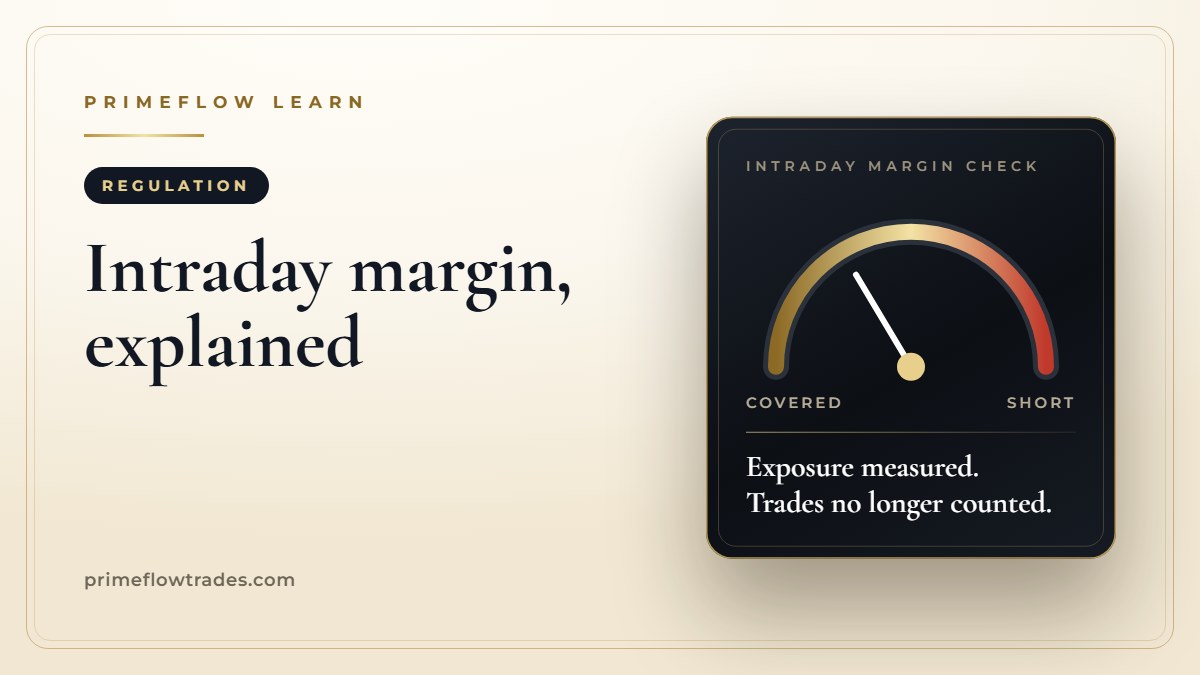
FINRA Regulatory Notice 26-10 removed the day-trade count and the $25,000 minimum. Brokers now check how much margin your account uses during the day instead. Our guide to intraday margin explains how that check works.
Two things stayed put. Cash account rules didn’t change at all. And brokers have until October 20, 2027 to switch to the new standard, so your margin account may still follow the old limits for now. Ask your broker which rules apply to your account today.
Side by side
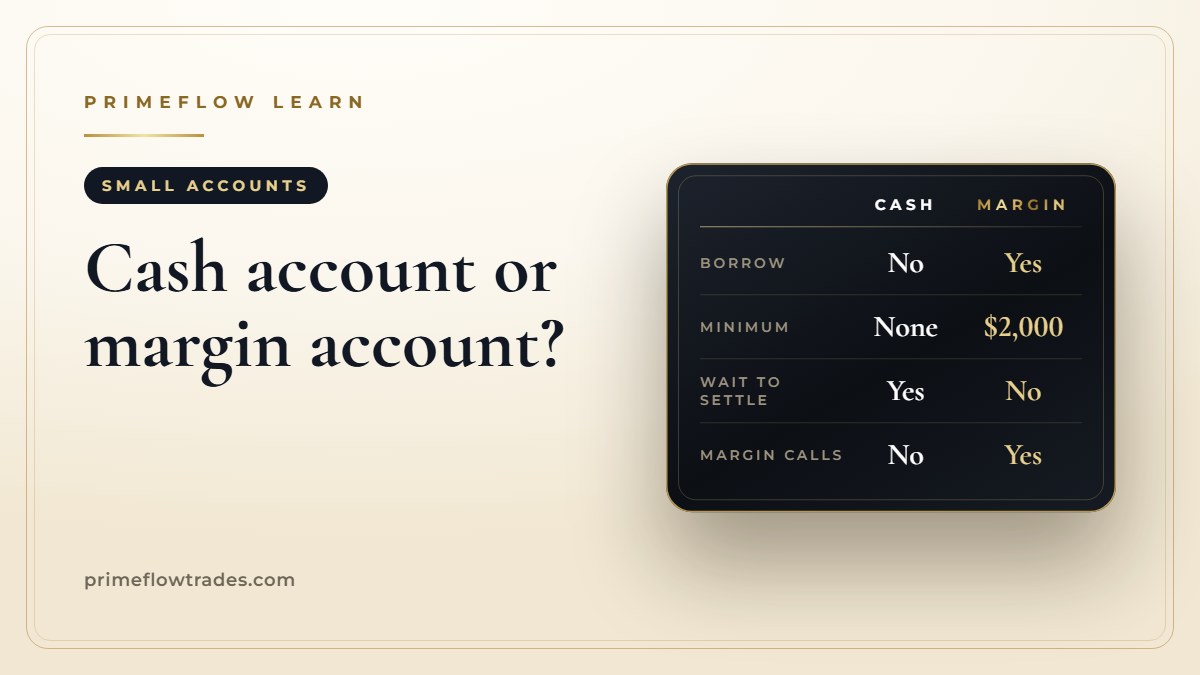
| Feature | Cash account | Margin account |
|---|---|---|
| Borrow from your broker | No | Yes, up to 50% of an eligible stock’s price |
| Minimum to trade | Your broker’s own minimum | $2,000, or the full price if less |
| Sell a stock bought with unsettled cash | Not until that cash settles | Yes |
| Day trading limit | Your settled cash | No FINRA trade count since June 4, 2026 |
| Margin calls | Never | Yes, and the broker can sell without notice |
| Interest | None | Charged on what you borrow |
How to choose
A cash account suits you if you want the simplest setup and never want to see a margin call. You’ll trade a little less often, because money needs a day to settle between trades, and for many people that pause is a feature.
A margin account suits you if you want to act on a trade without waiting for yesterday’s sale to settle. Plenty of traders open one for that flexibility alone and never borrow a dollar. Borrowing is a choice the account allows, not one it forces.
Whichever you choose, the habit that matters most is the same: decide the size of every position before you buy. Risk management basics shows the simple math, and day trading under $25,000 covers what else changed for small accounts.
Common questions
Can I day trade in a cash account?
Yes, as long as each purchase is paid for with settled cash. The limit in a cash account is how much settled cash you have, not how many trades you make. Selling a stock that was bought with unsettled money before that money settles is a good faith violation.
What is a good faith violation?
It happens in a cash account when you buy a stock with money from a sale that hasn’t settled yet, then sell the new stock before that money settles. Brokers set their own penalties, and repeated violations commonly lead to a 90-day period of trading with settled cash only.
How much money do I need for a margin account?
FINRA requires at least $2,000 in the account, or the full purchase price if that’s less, before you can buy on margin. Brokers can require more.
Do I still need $25,000 to day trade in a margin account?
Not under FINRA rules. The $25,000 minimum was removed on June 4, 2026. Brokers have until October 20, 2027 to switch to the new standard and can keep stricter house rules, so check with yours.
Can my broker sell my stocks in a margin account?
Yes. If your equity falls below the required level, the firm can sell your securities to cover the shortfall, and it doesn’t have to contact you first.
Sources
- FINRA: Margin Accounts
- FINRA: Understanding the New Intraday Margin Requirements
- Investor.gov: Trading in Cash Accounts
- FINRA Regulatory Notice 26-10
Rules are summarized for general education. Check the current requirements for your account with your broker.

PrimeFlow Trades publishes educational research and market commentary. Nothing on this page is investment advice or a recommendation to buy or sell any security. Trading involves risk, including the loss of money you invest. Past results, including any trade shown here, do not guarantee future results.