The stock market is open six and a half hours a day, and you don’t need to watch all of them. The best time of day to trade stocks comes down to knowing what each part of the session brings. Once you know the rhythm, you can be at the screen for the hours that count and away from it for the ones that don’t.
The short version
- Regular trading runs from 9:30 a.m. to 4:00 p.m. Eastern time. The hours before and after it come with risks the SEC and FINRA spell out.
- The first hour is when overnight news meets the full market. It brings the biggest moves of the day and the most expensive mistakes.
- The middle of the day is usually quieter. Prices tend to drift, and it’s a fine time to step away.
- The last hour picks up again as buyers and sellers settle their positions before the close.
- A buy price you chose ahead of time does more for you than any clock.
Stock market hours at a glance
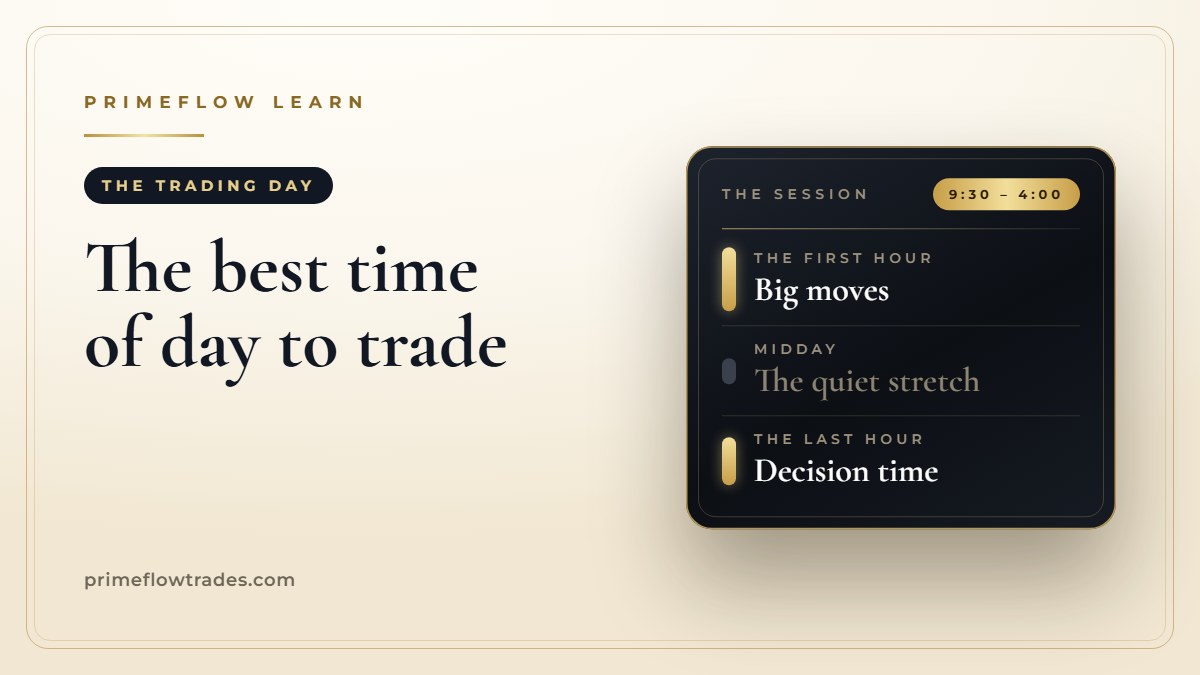
The New York Stock Exchange and Nasdaq open at 9:30 a.m. and close at 4:00 p.m. Eastern time, Monday through Friday, apart from market holidays. That’s the regular session, and it’s when nearly everyone is trading: funds, advisors, banks and everyday investors.
Many brokers also let you trade outside those hours. FINRA describes premarket trading as typically running from 7:00 to 9:30 a.m. and after-hours trading from 4:00 to 8:00 p.m. Far fewer people trade then. The SEC warns that prices in those hours may not match the prices once regular trading opens, and that some stocks may not trade at all.
So for most people the real choice is which part of the regular session to give their attention to. There are three, and each one asks something different of you.
9:30 to 10:30 a.m.: the first hour of trading
Everything that happened while the market was closed gets priced in during the first hour. Earnings released the night before, an analyst upgrade, news from overseas: at 9:30 the whole market gets its first chance to act on it with real money.
That makes the first hour the most active stretch of the day. Some stocks jump in the first few minutes and keep climbing. Others jump, stall, and spend the rest of the morning sliding back to where they started. From the opening bell, the two can look exactly the same.
That’s where most of the expensive mistakes happen. A stock is up 6% at 9:32, it’s on every screen, and buying feels urgent. Give it a few minutes and the picture usually gets clearer. A stock that keeps its ground through the first half hour is telling you far more than one that spiked in the first sixty seconds.
Late morning to early afternoon: the midday lull
By late morning the overnight news has been absorbed, and on most days trading slows down. Around lunchtime prices often drift sideways inside a narrow range, and a move that starts here often runs out of steam just as fast.
If there’s a worst time of day to trade stocks, this is usually it. Plenty of new traders get into trouble in this stretch, mostly out of boredom. Nothing is happening, so they go looking for something to do, and they buy a stock that ticked up twenty cents because it was the only thing moving.
A better use of the quiet: check your open positions against the targets you set, look over your sizing, then get up and leave. Lunch with your spouse or a round of nine holes costs you nothing here.
3:00 to 4:00 p.m.: the power hour
Activity usually picks up again in the final hour, from about 3:00 to 4:00 p.m. Many traders call it the power hour. Those who don’t want to hold overnight close out, and others position for the next day. The closing price is the one that gets printed in the paper, so a lot of buying and selling is aimed squarely at it.
For you, the last hour is decision time. Are you holding this position overnight or not? A stock that finishes strong, near the high of the day, is in very different shape from one that gives back its morning gains in the last thirty minutes.
How PrimeFlow fits around a busy day
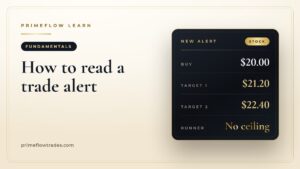
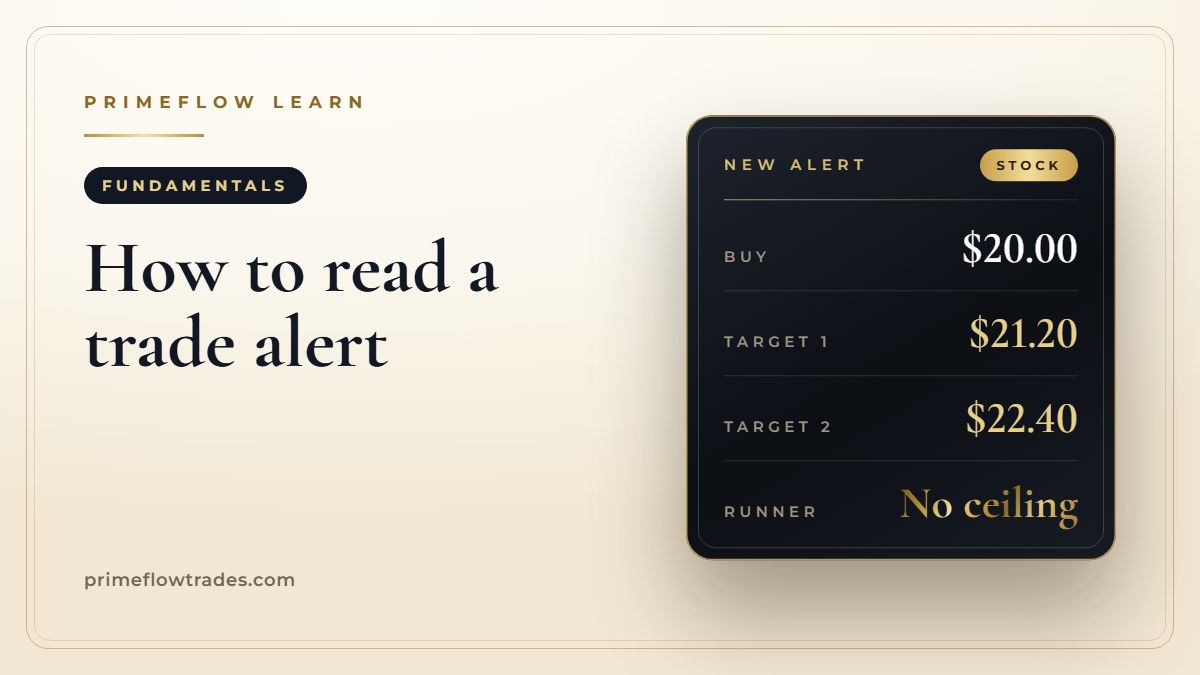
You don’t need to sit through all six and a half hours. Every PrimeFlow alert gives you the buy price, two profit targets and a runner we let ride, set before the trade, not during it. Our guide to reading a trade alert explains what each number is for.
With those numbers in hand, you can put your order in with your broker at the price you chose and get on with your day. Nobody is asking you to make a split-second call at 9:31, or to watch a quiet lunch hour for something to happen.
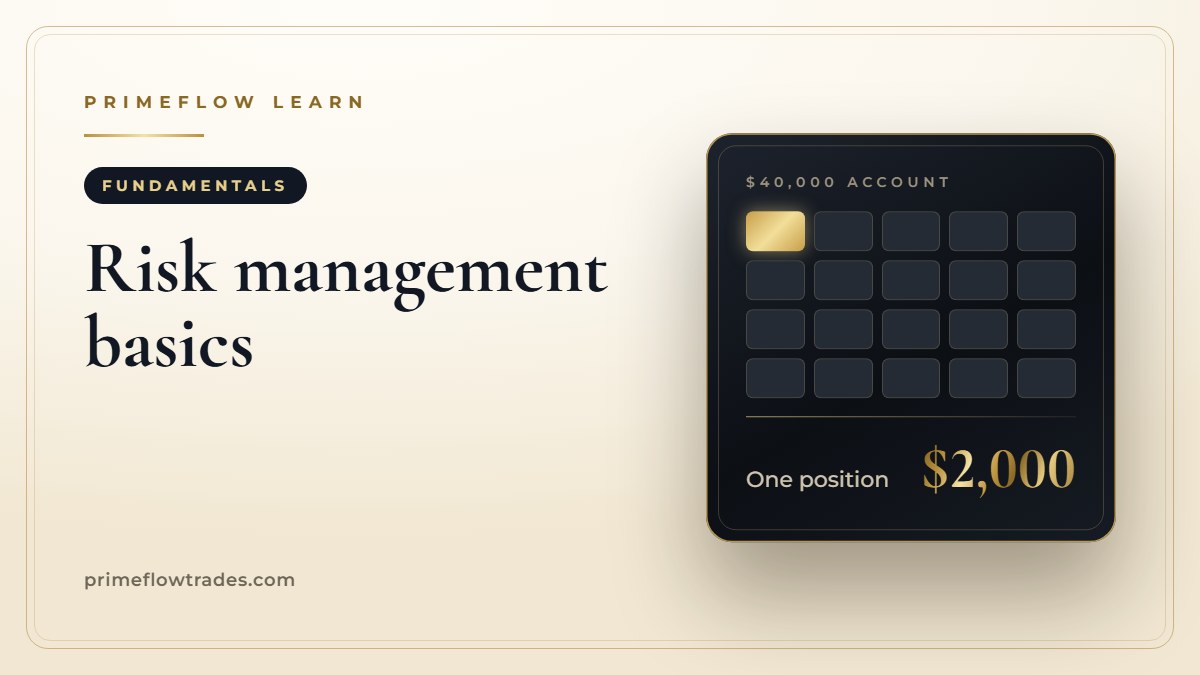
Size the position before you buy, too. Risk management basics shows the simple math, so one trade never decides how your year goes.
The runner is where patience pays. Our VSH alert went out at a buy price of $33.95 on May 8, 2026, and the stock reached $63.27 on June 3, 2026: up 86% in 26 days. Across our public trade log, 407 of our first 427 closed alerts were winners. Our free 40-Day Retirement Position guide shows how we hold a runner for weeks.
So when is the best time to buy stocks?
If you can be at the screen for one stretch, make it the first hour, and treat the first few minutes as information rather than an order to buy. If mornings are taken, the last hour is your second-best window, and it’s when you make the hold-or-sell call anyway.
Whichever you pick, the habit that matters is the same: decide the price before the market gives you a reason to rush. If you want the morning laid out step by step, The 40 Minutes That Matter is where our desk starts every new trader.
Common questions
What time does the stock market open and close?
The regular session runs from 9:30 a.m. to 4:00 p.m. Eastern time, Monday through Friday, apart from market holidays. Many brokers also offer premarket trading, typically from 7:00 to 9:30 a.m., and after-hours trading, typically from 4:00 to 8:00 p.m.
What is the best time of day to buy stocks?
For most traders it is the first hour after the opening bell, once the first few jumpy minutes have passed. That is when overnight news gets priced in and the most buyers and sellers are active. The last hour of the day is the second-best window.
What is the power hour in stock trading?
The power hour is the last hour of the regular session, from 3:00 to 4:00 p.m. Eastern time. Activity picks up as traders close out positions before the bell or set up for the next day.
What is the worst time of day to trade stocks?
For many traders it is the midday lull, roughly late morning to early afternoon, when prices often drift sideways and moves fade quickly. The first few minutes after the open can also be costly if you chase a stock that is jumping around.
Can I trade stocks before the market opens or after it closes?
Many brokers offer premarket and after-hours trading. The SEC and FINRA warn that fewer people trade in those hours, prices can swing more, and some firms accept only limit orders, where you name your price in advance.
Do I need to watch the market all day to trade?
No. If you know your buy price and profit targets before the trade, you can place your order with your broker and check in at set times, such as the first hour and the last.
Sources
- SEC: After-Hours Trading, Understanding the Risks
- FINRA: Extended-Hours Trading, Know the Risks
- FINRA Rule 2265: Extended Hours Trading Risk Disclosure
Trading hours and rules are summarized for general education. Check the hours and order types your broker offers.

PrimeFlow Trades publishes educational research and market commentary. Nothing on this page is investment advice or a recommendation to buy or sell any security. Trading involves risk, including the loss of money you invest. Past results, including any trade shown here, do not guarantee future results.