Most people read a trade alert for the ticker. The ticker is the least useful part. What decides how the trade turns out is the numbers around it, and whether they were published before the stock moved or after.
The short version
- The buy price sets up everything else. Pay well above it and you’re in a different trade.
- Two profit targets decide your exits before any money is at stake.
- The runner is the slice you keep after banking profit, so a big move can keep paying you.
- A real alert is published before the move and stays in a full public record.
The buy price is where the plan starts
Every number in a good alert is measured from the buy price. The targets, the size of the expected move, the reason the trade made sense: all of it assumes you got in close to that price.
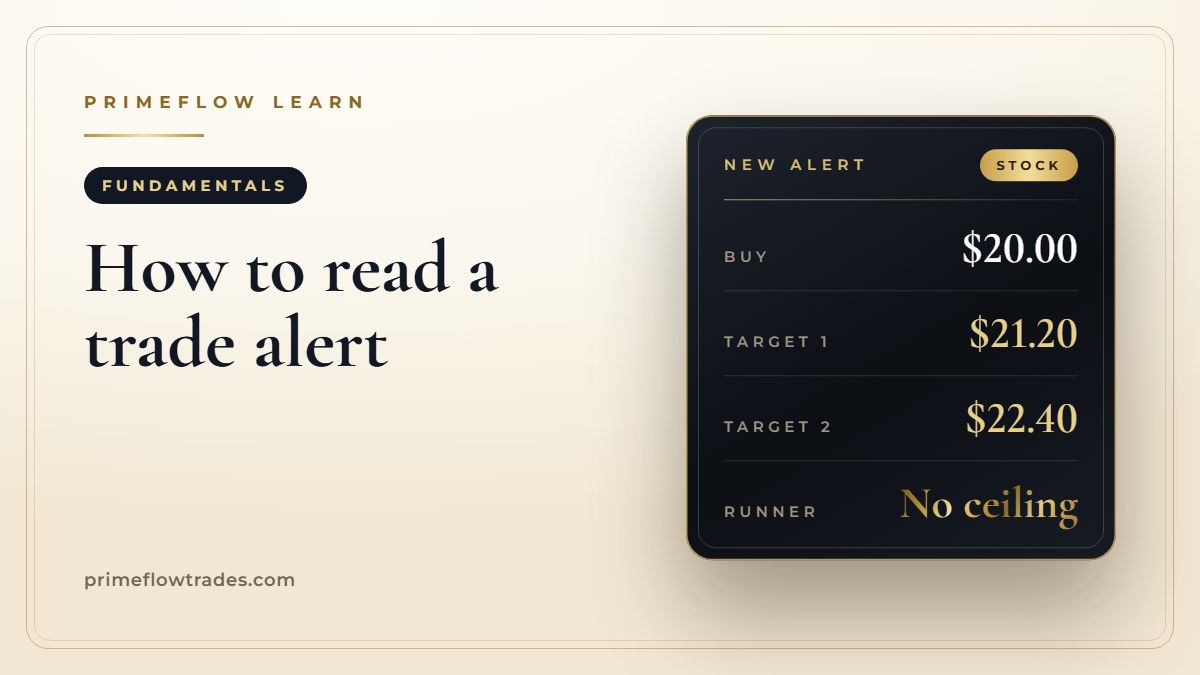
Say an alert says buy at $20.00, with a first target of $21.20. That’s a 6% move. If you pay $20.80 because you saw it late, the same target is now less than 2% away, and an ordinary wobble can take you from ahead to behind. Same stock, same ticker, a much worse trade.
That’s why chasing hurts so reliably. When a stock has already run well past the buy price, you haven’t missed that trade. You’d be starting a new one that nobody planned. Let it go. There will be another.
Two profit targets: paying yourself on the way up
Targets do two jobs. They put real money back in your account while the trade is working, and they take the exit decision out of the moment, when excitement or nerves make it hardest.
A common structure uses two. At the first target you sell part of the position and bank the profit. At the second you sell more. Using the same example, a buy at $20.00 might carry targets of $21.20 and $22.40.
Once the first target is banked, the rest of the position is sitting on profit you’ve already taken. That changes how it feels to hold, and holding is where the bigger money gets made.
The runner: how the big wins happen
After the targets, a small slice of the position stays in with no ceiling. That’s the runner.
Most moves cool off somewhere around the targets. A few keep climbing for weeks. Nobody can tell in advance which ones will, so the runner is how you’re still holding when one does.
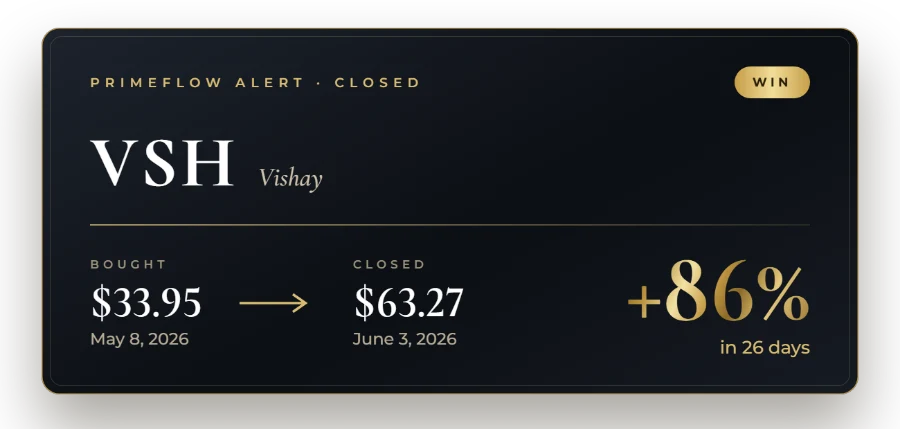
One of our own alerts shows it. Vishay Intertechnology (VSH) was posted at $33.95 on May 8, 2026. The alert closed on June 3 at $63.27, 86% above the buy price, 26 days later. Moves like that are exactly what the runner is for.
A runner won’t pay on every trade. When a move cools off, that slice gives back some of its gain. The trade-off is worth it, because a single run like VSH can outweigh a long list of small give-backs.
How to tell a real plan from a screenshot
The test is the timestamp. Were the buy price and the targets published before the move, somewhere they can’t be edited afterward?
A chart posted after a big move, with an arrow drawn at the low, tells you nothing about whether anyone could have acted on it. A record of every closed alert, with the dates and prices published at the time, tells you a great deal.
Ask any alert service for the whole record, not the highlights. Ours is public. The PrimeFlow trade log lists every closed alert, and 407 of our first 427 closed alerts were winners.
What an alert can’t decide for you
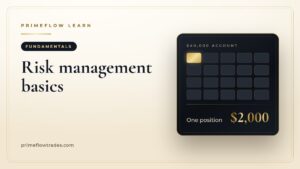
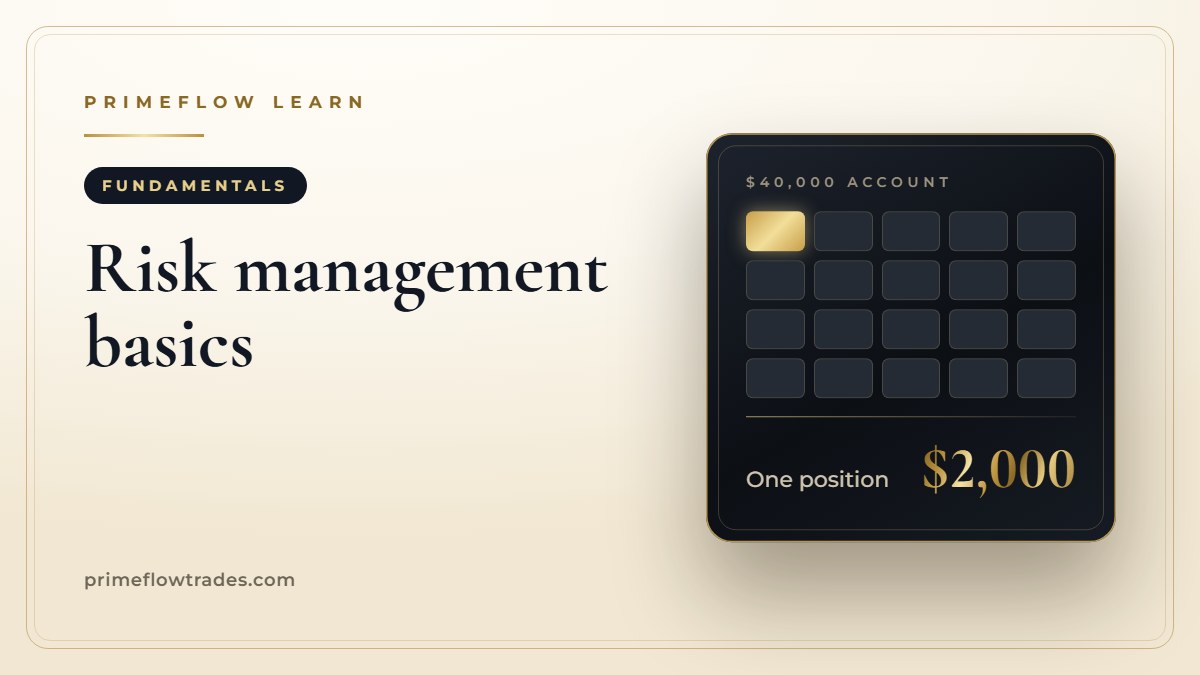
An alert hands you the plan. It can’t tell you how much of your own money belongs in it. That depends on the size of your account and how much you can hold calmly through a rough week, and it’s worth settling before the next alert arrives. Risk management basics shows the simple math.
Common questions
What does the buy price in a trade alert mean?
It’s the price the trade was planned around. The profit targets and the expected move are measured from it, so buying well above it changes the trade even though the ticker is the same.
What is a profit target?
A price, set before you buy, where you sell part of the position and bank the gain. Alerts often use two, so profit is taken in steps as the stock rises.
What is a runner in trading?
The small part of a position you keep after the profit targets are hit. It has no upper limit, so it keeps gaining for as long as the stock keeps climbing, whether that’s days or weeks.
Should I buy if the stock is already well above the alert’s buy price?
Many traders pass in that case. The targets were set from the buy price, so paying much more shrinks the reward left in the trade while the downside stays the same.
How can I tell if a trade alert service is credible?
Check whether buy prices and targets are published before the move, with dates you can verify, and whether the full record of closed alerts is available rather than a few selected winners.
PrimeFlow Trades publishes educational research and market commentary. Nothing on this page is investment advice or a recommendation to buy or sell any security. Trading involves risk, including the loss of money you invest. Past results, including any trade shown here, do not guarantee future results.