Premarket trading is where a stock’s day starts, often while most of us are still on our first cup of coffee. What premarket trading tells you is how the first buyers and sellers are reacting to the news that broke overnight. What it can’t tell you is whether that reaction will survive 9:30, when the rest of the market shows up with real money.
The short version
- FINRA describes premarket trading as typically running from 7:00 to 9:30 a.m. Eastern. Each broker sets its own hours.
- It shows you the first reaction to overnight news: earnings, upgrades, deals.
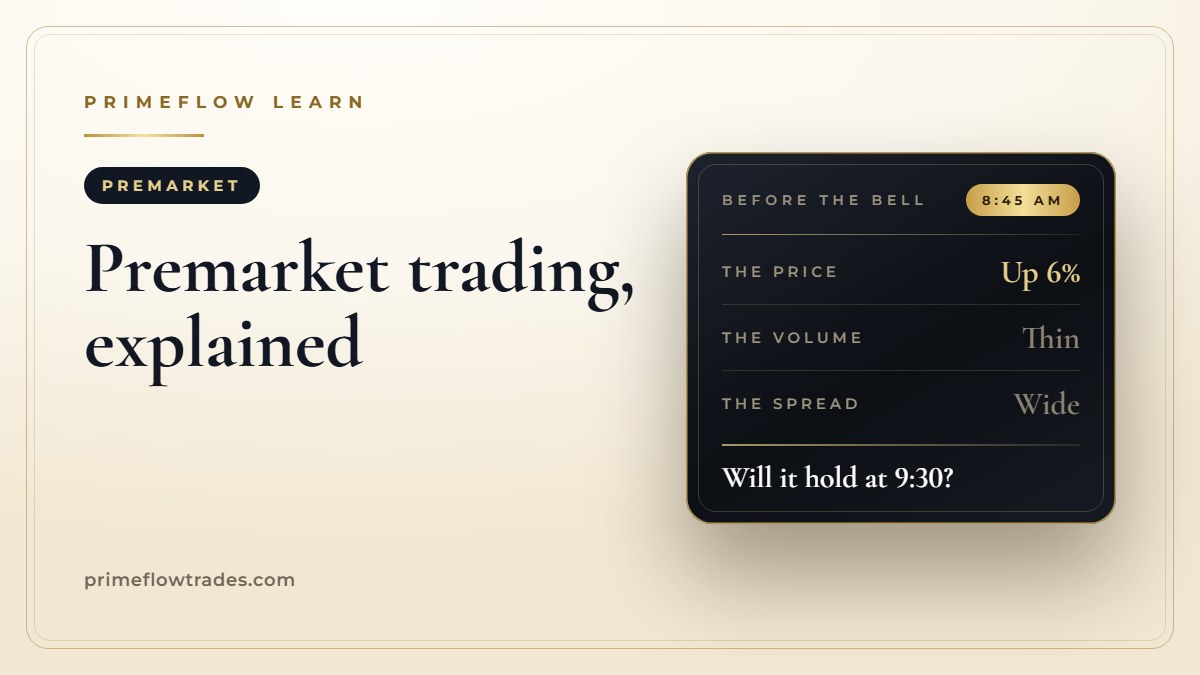
- Far fewer people trade before the bell, so prices swing more and the gap between buying and selling prices is wider.
- A big premarket move on light trading can fade fast once the opening bell brings everyone else in.
- Decide your buy price before 9:30, not because a stock was up 6% at 8:45.
Premarket trading hours, and who is trading
The regular session runs from 9:30 a.m. to 4:00 p.m. Eastern. FINRA describes premarket trading as typically running from 7:00 to 9:30 a.m., and many brokers let everyday customers trade in that window. Some open earlier, some later, and some don’t offer it at all. Your broker’s own hours page is the final word.
The bigger difference is who shows up. During the regular session, funds, banks, advisors and millions of individual investors are all trading the same stocks. Before the bell it’s a much smaller crowd. The SEC points out that many of the people trading outside regular hours are professionals at large institutions, often with more information than the average investor has.
The SEC warns that some stocks may not trade at all outside regular hours. A stock with fresh news, on the other hand, can be busy by 8:00.
What does premarket trading tell you?
Premarket trading tells you one thing well: how the first buyers and sellers are reacting to news that came out while the market was closed. Companies often release earnings after the close or before the open. Deals, analyst upgrades and news from overseas land overnight too. The premarket is the first place that news meets money.
A stock up 8% at 8:30, with plenty of shares changing hands and a fresh earnings report behind it, is telling you something real: people are paying up to own it. A stock up 8% on a few hundred shares and no news is telling you far less. That can be a handful of orders in a quiet room.
What the premarket price doesn’t give you is the opening price. FINRA notes that the next day’s open depends on supply and demand when the market opens. The 8:45 price is a preview, not a promise.
Why premarket moves often fade at the open
Here’s the trap. A stock climbs 6% before the bell, it lands on every list of morning movers, and buying it feels like getting in early. Then 9:30 arrives, the whole market weighs the same news, and the stock can give back half that move in the first fifteen minutes.
The warnings regulators make brokers hand you explain why. Under FINRA Rule 2265, a broker that offers extended-hours trading has to tell you about these risks:
- Fewer buyers and sellers. Your order may fill only partly, or not at all.
- Bigger price swings than you’d see in the regular session.
- Wider spreads. The gap between what buyers offer and what sellers ask gets bigger, and you pay that gap the moment you buy.
- Prices that may not hold. Premarket prices may not match the prices at the next open.
- Overblown reactions to news. News out of regular hours, combined with thin trading, can have an exaggerated and unsustainable effect on a stock’s price.
That last one is the heart of it. A move built on a few thousand shares can be undone by a few thousand more once the opening bell brings everyone else in. A move built on heavy buying and real news has a much better chance of standing up.
How to read a premarket move before the bell
You don’t need special software. Five questions, asked around 9:00, cover most of it.
- Is there news, and is it new? An earnings report out this morning is a reason. A stock drifting up with no headline is a question mark.
- How much has actually traded? Compare the premarket volume with what the stock normally trades in a full day. A big move on a sliver of its usual volume deserves suspicion.
- How wide is the spread? If buyers sit at $20.10 and sellers at $20.60, that fifty-cent gap is a cost you pay the second you buy.
- What is the rest of the market doing? One stock pushing up against a weak market has a harder morning ahead of it.
- What price would you actually pay? Write it down before 9:30. If the stock opens well above it, let it go.
If you do trade before the bell, use a limit order, where you name the most you’ll pay. FINRA notes that many brokers accept only limit orders in extended hours anyway, and the SEC points out that a limit order won’t fill if the market moves away from your price. That’s the point. You never pay more than you decided to.
For most readers, the better habit is to treat the premarket as homework and do the buying after the open. Our guide to the best time of day to trade stocks walks through what the first hour looks like once the full market arrives.
How PrimeFlow alerts handle the premarket
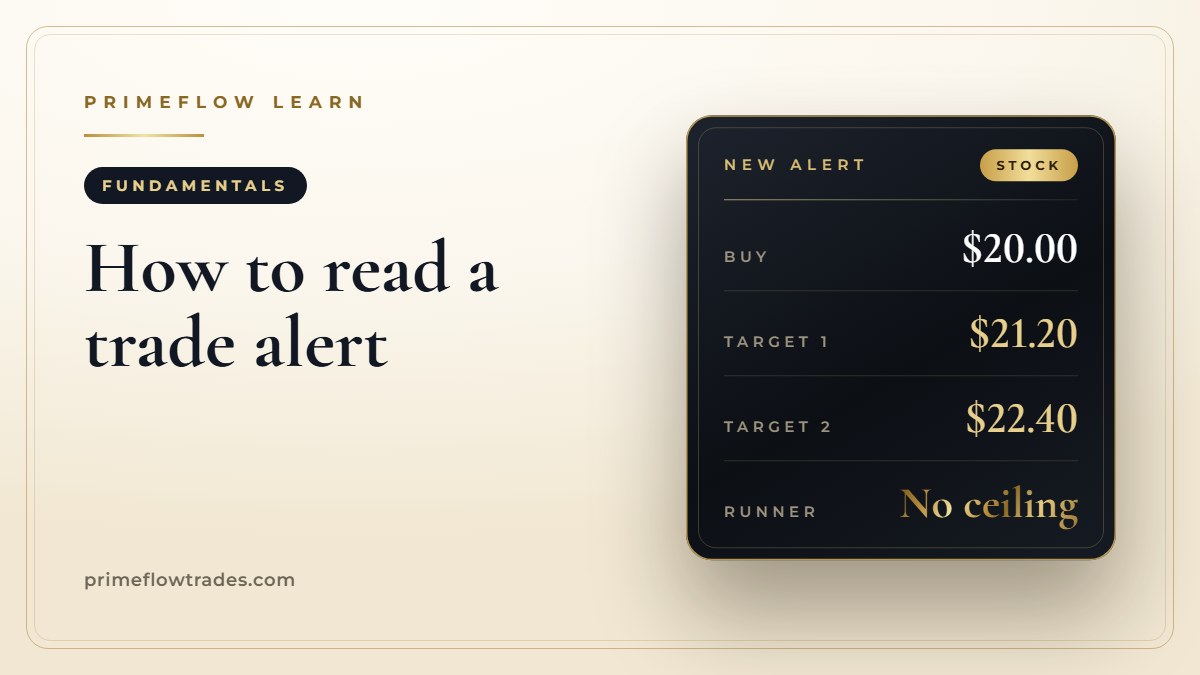
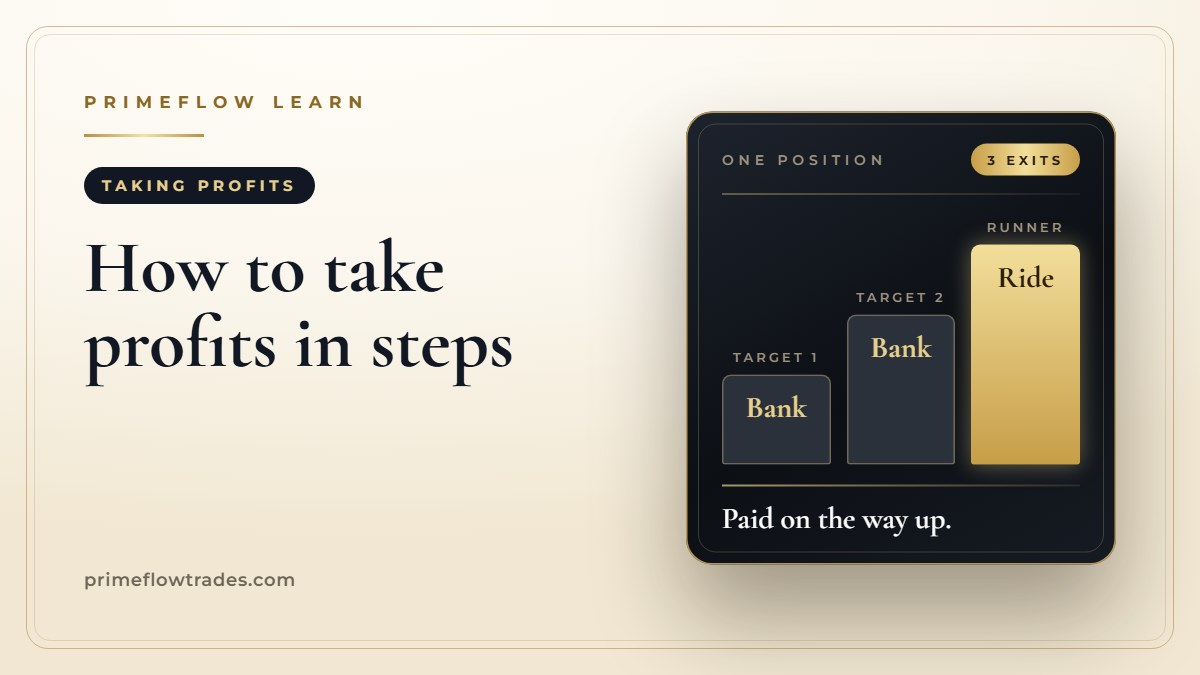
Every PrimeFlow alert gives you the buy price, two profit targets and a runner we let ride. Those numbers are set before the trade, so a stock jumping around at 8:45 doesn’t rewrite your plan. If a stock is already well above the buy price, chasing it means paying more than the plan called for.
Our guide to reading a trade alert explains what each number is for, and taking profits on stocks in steps shows how the two targets and the runner work together. Size the position before you buy, too. Risk management basics shows the simple math.
The runner is where patience pays. Our VSH alert went out at a buy price of $33.95 on May 8, 2026, and the stock reached $63.27 on June 3, 2026: up 86% in 26 days. Across our public trade log, 407 of our first 427 closed alerts were winners. Our free 40-Day Retirement Position guide shows how we hold a runner for weeks.
Think of premarket trading as the morning paper with prices printed on it. Read it, circle the stocks with real news and real buying behind them, and save your money for the open. If you want that first stretch of the session laid out step by step, The 40 Minutes That Matter is where our desk starts every new trader.
Common questions
What time does premarket trading start?
FINRA describes premarket trading as typically running from 7:00 to 9:30 a.m. Eastern time. Each broker sets its own hours, so some start earlier, some later, and some don’t offer premarket trading at all. Check your broker’s extended-hours page.
What does premarket trading tell you?
It shows how the first buyers and sellers are reacting to news that came out while the market was closed, such as earnings, upgrades or deals. A move backed by real news and heavy trading tells you far more than a move on a few hundred shares.
Do premarket moves hold at the open?
Sometimes, but there’s no guarantee. FINRA notes that the opening price depends on supply and demand when the market opens, and premarket prices may not match it. Moves on light trading can fade quickly once the full market arrives.
Is premarket trading risky?
It carries extra risks. The SEC and FINRA warn about fewer buyers and sellers, bigger price swings, wider gaps between buying and selling prices, and news that can move prices further than they hold.
Can regular investors trade in the premarket?
Many brokers let everyday customers trade before the bell, often with limit orders only, where you name the price you’ll pay. Hours and order types differ from broker to broker.
Should I buy a stock that is up big in premarket trading?
Treat a big premarket move as a reason to watch the stock, not an order to buy it. Check for news and volume, decide your price before 9:30, and let the opening minutes show you whether the move is holding.
Sources
- SEC: After-Hours Trading, Understanding the Risks
- FINRA: Extended-Hours Trading, Know the Risks
- FINRA Rule 2265: Extended Hours Trading Risk Disclosure
Trading hours and rules are summarized for general education. Check the hours and order types your broker offers.

PrimeFlow Trades publishes educational research and market commentary. Nothing on this page is investment advice or a recommendation to buy or sell any security. Trading involves risk, including the loss of money you invest. Past results, including any trade shown here, do not guarantee future results.