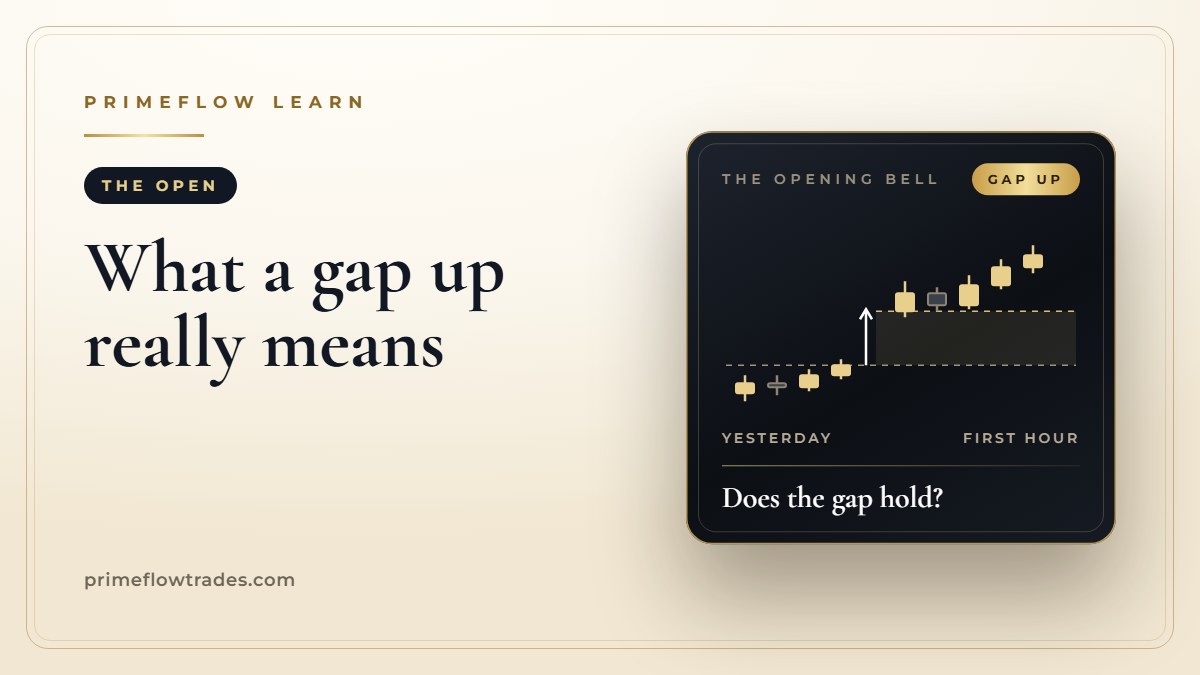
What is a gap up in stocks? It’s when a stock opens above the price where it closed the day before. Say a stock closes at $40 on Tuesday and its first trade on Wednesday morning is $43. On the chart, an empty space sits between Tuesday’s last price and Wednesday’s first. That space is the gap. The jump grabs the headlines, but what the stock does with it over the next hour tells you far more.
The short version
- A gap up means a stock’s first price of the day is higher than where it closed the day before.
- Most gaps follow news that landed while the market was closed: earnings, an upgrade, a big contract.
- Prices before the opening bell come from a thin crowd, and regulators warn they may not match the open.
- The first hour shows whether buyers keep paying the higher price or let it slide back toward yesterday’s close.
- Let the morning answer that question, then buy at a price you picked ahead of time.
What is a gap up in stocks?
The regular stock market session runs from 9:30 a.m. to 4:00 p.m. Eastern time. When a stock’s first price at 9:30 sits above the price it closed at the afternoon before, it has gapped up.
In our example the stock closed at $40 and opened at $43, a gap of $3, or 7.5%. On a chart, Tuesday’s last bar ends at $40 and Wednesday’s first bar starts at $43, with clear air between them. A gap down is the same thing in reverse: the stock opens below yesterday’s close.
Gaps of a few cents happen all the time. A gap of several percent in a single stock usually means something happened overnight that changed what buyers are willing to pay.
Why stocks gap overnight
The market closes at 4:00, but news doesn’t stop. FINRA’s own risk disclosure puts it plainly: important financial information is “frequently announced outside of regular trading hours.” Companies often release earnings after the close or before the open. An analyst upgrade, a new contract or a buyout offer can land overnight too.
Some of that reaction shows up before the bell. FINRA describes premarket trading as typically running from 7:00 to 9:30 a.m. Eastern, and some brokers open it earlier. The catch is that far fewer people trade then. The SEC warns that prices in these extra hours may not reflect the price when regular trading opens. Our guide to premarket trading covers what those early moves can and can’t tell you.
So the premarket price is a first guess, made by a small crowd. At 9:30 the full market arrives, funds and advisors and everyday investors included, and that guess gets tested.
Why the first hour tells the story
Once the bell rings, a gap can go one of two ways.
The gap holds. Buyers keep paying the higher price. The stock stays well above yesterday’s close, each dip is smaller than the climb before it, and new buyers step in on the way down. By mid-morning the stock may be trading above its opening price.
The gap fades. The people who bought yesterday, or in the hours before the bell, take their profits. The high from the first few minutes is never seen again, each bounce is weaker than the last, and the price slides back toward yesterday’s close. When it gets all the way back there, traders say the gap has filled.
Both outcomes start with the same exciting number at 9:30. The difference only shows once the full crowd has had time to vote with real money. That is what the first hour is for.
The costly habit: buying the first minute
Picture the stock up 7.5% at 9:31. It’s on every screen, it feels like it’s leaving without you, and you buy. If the gap fades, you’ve paid the highest price of the day.
Buying before the bell adds more risk on top. The SEC notes that the difference between what buyers bid and what sellers ask can be wider in these hours, and many brokers accept only limit orders, where you name your price in advance. You may get filled at a price the regular session never touches.
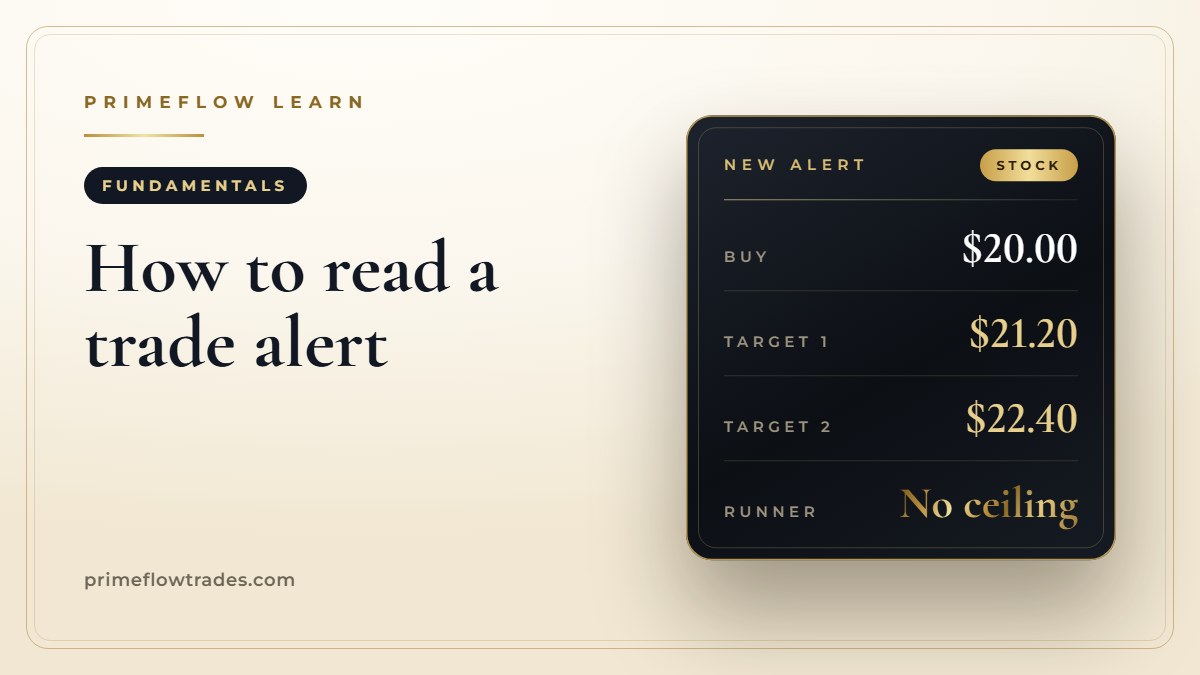
That’s why every PrimeFlow alert gives you the buy price up front, along with two profit targets and a runner we let ride. Our guide to reading a trade alert walks through each number. A price you picked with a clear head beats one you picked because the screen was flashing.
A simple plan for gap mornings
Before the bell, write down yesterday’s close and where the stock is trading now. Our guide on how to read a stock chart shows where to find that close. Know the size of the gap in dollars and in percent.
Find the reason. A company’s own news, like earnings or a contract, is different from a stock drifting up because the whole market is higher.
Let the opening play out. Watch whether the stock keeps its ground above yesterday’s close or starts giving it back. Nothing about a gap requires you to act at 9:30.
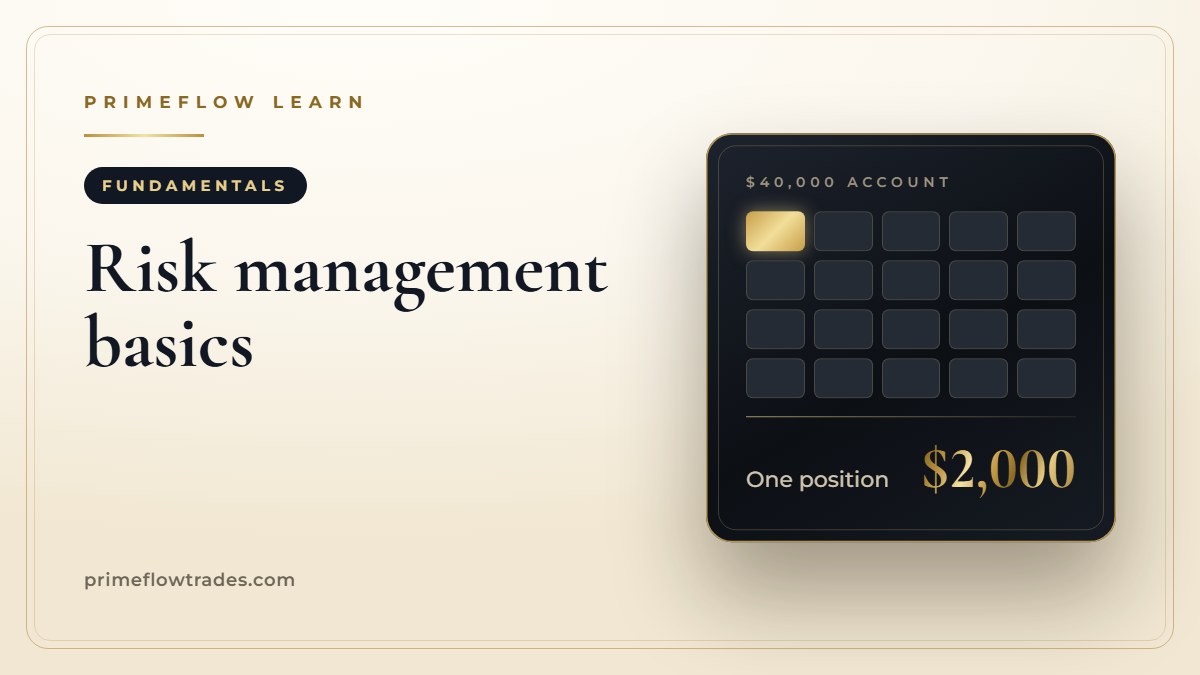
Set your size before you buy. Decide how much of your account goes into the position first. Risk management basics shows the simple math.
Plan the exits too. Take profits in steps: a first target, a second target, and a runner for the days a move keeps going. Our free 40-Day Retirement Position guide shows how we hold that runner for weeks.
That runner is where the big moves live. Our VSH alert went out at a buy price of $33.95 on May 8, 2026, and the stock reached $63.27 on June 3, 2026: up 86% in 26 days. Across our public trade log, 407 of our first 427 closed alerts were winners.
Common questions
What is a gap up in stocks?
A gap up is when a stock’s first price of the regular session is higher than its closing price the day before. It usually follows news that came out while the market was closed, such as earnings or an analyst upgrade.
What is the difference between a gap up and a gap down?
A gap up is when a stock opens above the previous day’s closing price. A gap down is when it opens below it. Both usually follow news that came out while the market was closed.
What does it mean when a gap fills?
A gap fills when the price moves back to where the stock closed the day before, erasing the jump from the open. Some gaps fill within hours, some take weeks, and some never fill.
Can I buy a stock before the market opens?
Many brokers let you trade before 9:30 a.m. Eastern. Fewer people trade then, prices can swing more, and the difference between buying and selling prices is often wider. Many brokers accept only limit orders in those hours.
Is a gap up a good sign?
It tells you something changed and buyers reacted. It doesn’t tell you whether they’ll keep paying that price. The first hour of regular trading is where that gets answered.
What time does the stock market open?
The regular session runs from 9:30 a.m. to 4:00 p.m. Eastern time. Premarket trading typically runs from 7:00 to 9:30 a.m., and some brokers offer earlier hours.
Sources
- SEC: After-Hours Trading, Understanding the Risks
- FINRA: Extended-Hours Trading, Know the Risks
- FINRA Rule 2265: Extended Hours Trading Risk Disclosure
Trading hours and rules are summarized for general education. Check the hours and order types your broker offers.

PrimeFlow Trades publishes educational research and market commentary. Nothing on this page is investment advice or a recommendation to buy or sell any security. Trading involves risk, including the loss of money you invest. Past results, including any trade shown here, do not guarantee future results.