Stock trading terms decide real money. Send a market order without knowing what a spread is, or sell a stock before your cash has settled, and one word you skimmed past comes straight out of your account. Here are the terms on your broker screen, in a trade alert and in the rules that changed in June 2026, in plain English.
The short version
- Spread: the gap between what buyers offer and what sellers want.
- Limit order: you name your price. A market order takes what’s there.
- Settled cash: sale money that has finished clearing, one business day after the trade.
- Pattern day trader rule: FINRA removed it effective June 4, 2026.
- Runner: the slice you keep after banking profit at your targets.
Stock trading terms for prices: bid, ask, spread and volume
- Bid: the highest price a buyer will pay right now.
- Ask: the lowest price a seller will take. Some screens call it the offer.
- Spread: the gap between the two. With a bid of $20.10 and an ask of $20.60, you’re 50 cents behind the moment you buy at the ask.
- Volume: how many shares changed hands. A big move on thin volume has few people behind it.
- Liquidity: how easily a stock trades. With fewer buyers and sellers, an order can fill partly or not at all.
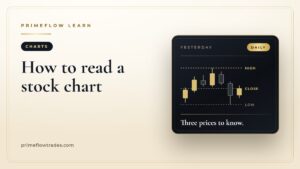
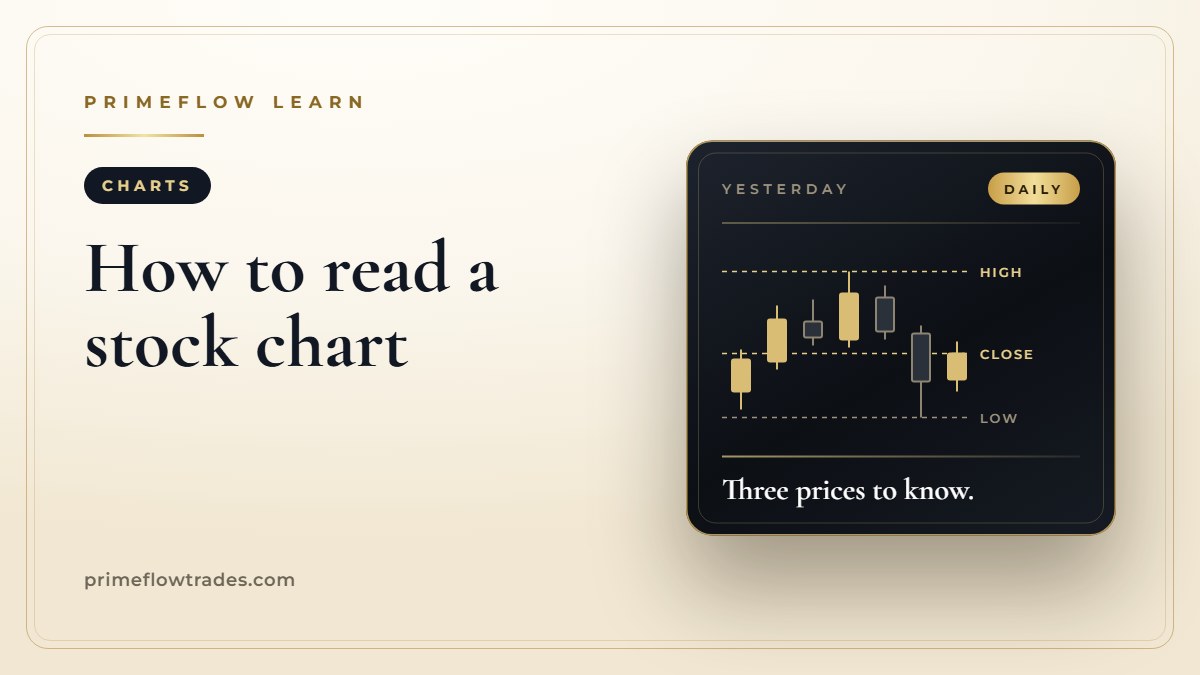
- High, low and close: the day’s top price, its bottom price and its last regular-session price. Our guide on how to read a stock chart shows why those three matter most.
- Candle: one bar on a chart, showing where the price opened, closed and traveled in that stretch of time.
Order types: market order vs. limit order
- Market order: buy or sell at the best price available. It usually fills right away, but the price isn’t guaranteed.
- Limit order: buy at your price or lower, or sell at your price or higher. You control the price, and the order may never fill.
- Fill: your order went through. A partial fill means only some of your shares did.
- Day order: good only for the trading day you enter it. Most orders are day orders unless you say otherwise.
Account terms: cash account, margin account and settled cash
- Cash account: you pay in full for what you buy and can’t borrow from your broker. Our cash account vs. margin account guide compares the two.
- Margin account: lets you borrow part of a purchase from your broker, with your shares securing the loan.
- Margin call: your broker’s demand for more money or shares when your equity, the account’s value minus what you owe, falls too low. If you don’t meet it, the firm can sell your shares.
- Buying power: what your broker says you can buy right now. In a margin account it can include money you’d be borrowing.
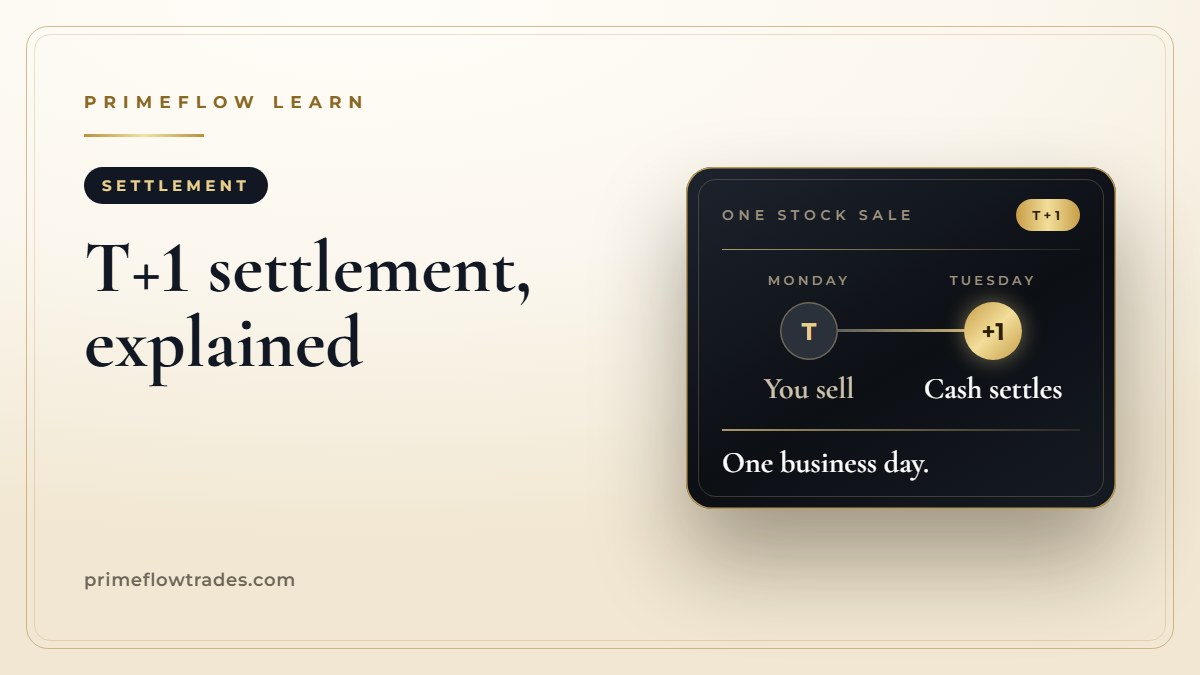
- T+1: a stock trade settles one business day after the trade date. Sell Monday, settled Tuesday. Here’s more on T+1 settlement.
- Settled cash: money that has finished clearing. Sale proceeds can’t be withdrawn until they settle.
- Good faith violation: in a cash account, selling a stock you bought with unsettled money before that money settles. Brokers set their own penalties. At Fidelity, three in 12 months means 90 days of buying with settled cash only.
- Freeriding: buying a stock and paying for it by selling those same shares. One violation can freeze a cash account for 90 days.
Is the pattern day trader rule still in effect? The terms that changed
- Day trade: buying and selling the same stock in the same session.
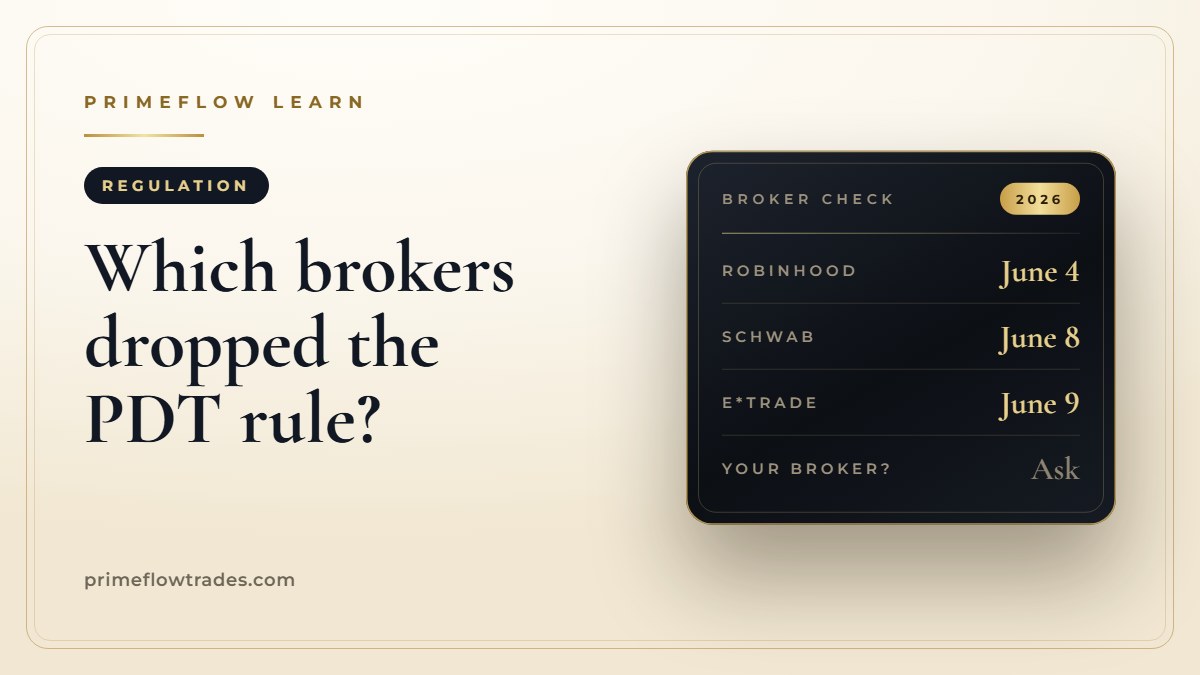
- Pattern day trader: the old label for four or more day trades in five business days in a margin account, which came with a $25,000 minimum. FINRA removed it effective June 4, 2026. Brokers may take until October 20, 2027 to switch, so check which brokers dropped the PDT rule.
- Intraday margin: the replacement. Brokers check whether your equity covers your open positions during the day, and no longer count trades. Our guide to intraday margin walks through it.
- Intraday margin deficit: the shortfall when it doesn’t. Still unpaid by the fifth business day, it can freeze parts of the account for 90 calendar days.
- $2,000 minimum: the equity FINRA requires for borrowing. Below it, a margin account trades with available cash only.
A smaller account has more freedom now and fewer guardrails. Our free Day Trader Trap report gives you five checks to run before any money goes in.
Trading hours terms: premarket, the open and the power hour
- Regular session: 9:30 a.m. to 4 p.m. Eastern.
- The open: the 9:30 start, when full trading volume arrives.
- Premarket: trading before the open, typically from 7 a.m. Eastern, though your broker’s hours may differ. Prices can swing more and spreads run wider. Here’s what premarket moves tell you.
- After hours: trading after the close, typically until 8 p.m. Eastern. Some stocks don’t trade at all.
- Gap up: a stock opens above yesterday’s close. A gap down opens below it. Read more on what a gap up means.
- Power hour: traders’ nickname for the last hour, 3 to 4 p.m. Our best time of day to trade stocks guide covers the full day, hour by hour.
Trade alert terms: buy price, targets and runner
- Buy price: the price the whole alert is built around. Pay well above it and you’re in a different trade.
- First and second target: the prices where you sell part of your position and bank profit. Here’s how to take profits on stocks, share by share.
- Runner: the slice you keep after the targets, with no ceiling on it. Our free 40-Day Retirement Position guide shows how we hold one for weeks.
- Closed alert: an alert that has been fully sold, with its final result on the record.
Put those words to work on a real alert. Our Vishay Intertechnology (VSH) alert went out at $33.95 on May 8, 2026, and closed at $63.27 on June 3: up 86% in 26 days. 407 of our first 427 closed alerts were winners, and every one sits on the PrimeFlow trade log. Our guide on how to read a trade alert shows what each number is for.
Common questions
What stock trading terms should a beginner learn first?
Start with bid, ask, spread, market order, limit order and settled cash. Those six cover what you see on the order screen and the mistakes that cost new traders money most directly.
What’s the difference between bid and ask?
The bid is the highest price a buyer will pay. The ask is the lowest price a seller will take. The ask is almost always higher, and the gap between them is the spread.
What does settled cash mean?
It’s money that has finished clearing. Money from a stock sale settles one business day after the trade. In a cash account, selling a stock you bought with unsettled money before that money settles is a good faith violation.
What does T+1 mean in stocks?
T stands for the trade date, and the 1 means one business day. A stock you sell on Monday settles on Tuesday. A stock you sell on Friday settles the next Monday, and a holiday can add a day.
What is a good faith violation?
It happens in a cash account when you sell a stock you bought with unsettled money before that money settles. Each broker sets its own penalty. At Fidelity, three in 12 months brings a 90-day restriction to settled cash.
Is the pattern day trader rule still in effect?
FINRA removed it effective June 4, 2026, along with the $25,000 minimum. Brokers may phase in the change until October 20, 2027, and can keep stricter rules of their own, so ask yours where it stands.
Sources
- Investor.gov (SEC): Bid Price/Ask Price
- Investor.gov (SEC): Understanding Order Types
- Investor.gov (SEC): Trading in Cash Accounts
- FINRA: Understanding Settlement Cycles
- FINRA Regulatory Notice 26-10
- FINRA: Understanding the New Intraday Margin Requirements
- FINRA: Margin Accounts
- FINRA: Extended-Hours Trading, Know the Risks
- Fidelity: Trading Restrictions FAQs
Terms and rules are summarized for general education. Check the current rules for your account with your broker.
PrimeFlow Trades publishes educational research and market commentary. Nothing on this page is investment advice or a recommendation to buy or sell any security. Trading involves risk, including the loss of money you invest. Past results, including any trade shown here, do not guarantee future results.